Arnav Agrawal
Interpretability research and mathematics at USC. Tier-0 cloud infrastructure at Amazon.
Background and recent: I'm a senior at the University of Southern California studying applied math (B.S. + M.S., May 2027). This past summer I built Tier-0 cloud infrastructure at Amazon in NYC. I redesigned access-token storage for CloudAuth, a security service handling 1M+ TPS, and cut its cost from $4.8M to $200K a year.
Focus right now: During the school year I do interpretability research at Allegro Lab, where I'm grateful to be advised by Professor Robin Jia. I started on a follow-up to our lab's HUBBLE project, analyzing pre-training memorization at the sample level and working toward memorization scaling laws for 1B to 8B parameter transformers. Right now I'm most interested in finding latent mechanisms in LLMs that yield actionable insights, and separately, in training-time interventions for reward hacking. Before Allegro Lab, I worked on alignment engineering for LLMs at ISI's HUMANS Lab, led by Professor Emilio Ferrara, studying cultural alignment in the Llama family of models.
Motivation: When I first got into AI alignment research, the alignment methods I worked with felt fragile: behavior moved, but it was hard to tell what had actually changed inside the model. That pushed me toward interpretability, which I think is the path to aligning models robustly. I want to understand what language models truly learn, uncover the internal mechanisms behind their behavior well enough to predict and steer it, and build the systems that make that research possible at scale.
Research + Experience
Selected Projects
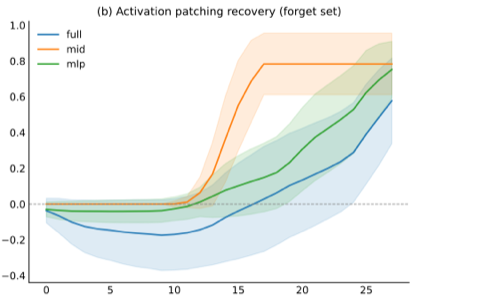
Evaluating the Robustness of LLM Unlearning: Benchmarking, Targeted Interventions, and Knowledge Reconstruction
Does unlearning remove knowledge, or just hide it? We apply NPO to Llama-3.2-3B-Instruct on TOFU with updates restricted to the full model, the middle layers, or the MLPs, and probe each with the logit lens, residual-stream similarity, and activation patching. MLP-only updates give the best forgetting-utility tradeoff, but in every regime the effects show up downstream of the updated layers, and patching a single layer of pre-unlearning activations recovers up to +0.78 of the suppressed probability: NPO mostly suppresses outputs rather than erasing what the model knows.
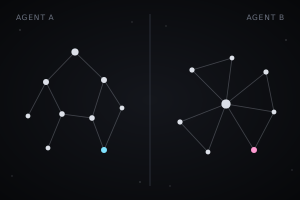
Agent Royale: Head-to-Head Evaluation of AI Coding Agents in Isolated Sandboxes
Designing agents well is becoming one of the most valuable skills there is, yet most people build them in isolation with no signal on whether their approach is any good. Agent Royale turns that into a PvP game: two players each pick a model and write a system prompt, their agents take on the same coding task (from a bouncing-ball physics simulation up to a B2B billing pipeline), and the better agent wins. Nobody reads a manual to climb the Clash Royale ladder; competition is the fastest teacher.
Each agent runs a tool-use loop (write files, run bash, list directories) inside its own isolated E2B sandbox, orchestrated by a FastAPI backend over WebSockets. Every file write is parsed for imports and streamed to a Next.js and Three.js frontend, so both codebases grow live as 3D dependency graphs, with files as nodes and imports as edges. Matches are scored on tokens used, pre-written edge-case tests, and dependency-structure quality, plus an LLM judge that explains why one agent won. Shipped to 100+ users at under $0.10 per 30-minute match.
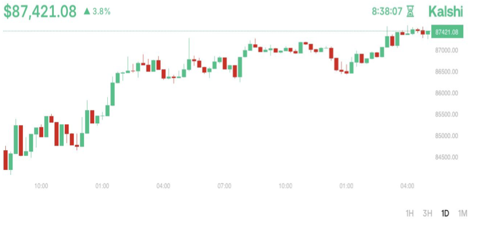
Cross-Market Arbitrage in Bitcoin Prediction Markets: Polymarket vs. Kalshi
Polymarket and Kalshi list the same daily Bitcoin price contracts, and they often disagree. In one snapshot, Yes on the $88K strike cost 16¢ on Polymarket while No cost 79¢ on Kalshi, so buying both locked in about 5¢ per pair before fees. I built a pipeline that pulls both order books, detects these gaps, sizes positions by volume and capital, and routes limit and fill-or-kill orders to avoid slippage and partial fills. Thin volume and platform fees cap how far it scales.
Writing
We are living through a period of rapid change, and getting to navigate it this early in my career is very exciting. What drives me most is learning and absorbing as much as I can.
I will soon be publishing my thoughts here on whatever piques my interest.
Education
Otherwise
I have played since I was five, coming up through academy football to captain my school team and represent my state at several national championships in India. At USC I played for Trojans FC, a student-led competitive club, and I still play intramural tournaments with friends from my freshman dorm at Parkside. I play center midfield and support Manchester United.
I picked up the acoustic guitar ten years ago and built my foundations on classic rock, blues, and indie pop. Always up for a jam: we can improvise over your favorite songs.
The best lesson I know in risk, sizing, and decision-making under pressure with incomplete information. I play occasionally with friends, and it is a great way to meet people in a new city.